
Gravity(Attraction) of Kyoto 33 Tips for combating overtourism The idea behind popular souvenirs: Fumiko and sliced yokan
 |
 |
 |
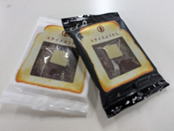
| Photo taken on 26th,Jan. 2026 : Kameya Yoshinaga’s sliced yokan. |
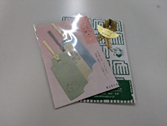
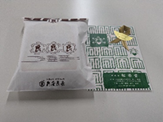
Photo taken on 26th Jan. 2026 : Shoyeido’s Fumika. |
For some time now, there is one thing I always buy as a souvenir for people visiting from overseas. It is Fumika, a small, compact incense from the long-established incense maker Shoyeido. I usually attach this to letters, but when I bring it to extremely busy people, they put it in their shirt pocket or leave it on their desk, and they say it makes them feel very noble, and they are well-received and grateful. I also buy it as a souvenir when I go abroad.
Shoyeido has diversified its incense products from those used in temples and Buddhist ceremonies to those used in everyday life, and has gained many fans overseas as interior and relaxation items. With a focus on authenticity, Shoyeido is spreading incense culture to the world.
Sliced yokan, which is also rapidly gaining in popularity, is an evolution of regular yokan. The proprietress of Kameya Yoshinaga would give her sons sliced cheese for breakfast, one who loved cheese, and thinly sliced yokan and put it on bread for the other son who had a sweet tooth. It was at this time that she came up with the idea for sliced yokan. It was all thanks to her son who loved cheese.
This sliced yokan was released in September 2018 and has become a hit, achieving a thousand-fold increase in sales in three years. Its popularity is particularly among young people and men, and it seems to be blurring the line between Japanese and Western confectionery. It is a sliced yokan made with butter and a white bean paste base, with Okinawan salt added for a salty taste. Four seasonal flavors are available throughout the year: sliced yokan made with baked sweet potato butter in the fall, “berry” in the spring, “passion fruit” in the summer, and “cocoa” in the winter.
The idea was conceived by the proprietress of Kameya Yoshinaga, Yuiko Yoshimura (the 8th proprietress), who after graduating from university earned a culinary diploma from Le Cordon Bleu Paris in France, then trained at a restaurant before returning to Japan, where she has a unique perspective.
The idea of putting yokan on bread and eating it has always been something I’ve enjoyed experimenting with since I was a child, and I’m happy to see it being commercialized. I’ve enjoyed trying out different flavors when I turned chirashi sushi into fried rice, or udon noodles simmered with roasted seaweed, or trying different dishes using ingredients I had on hand and changing the seasoning.
I love bean paste, and my English name in high school was Ann. I still love Japanese sweets, and I keep them frozen so I can eat them whenever I want. Red beans in particular are very nutritious, and they are delicious both with and without sugar. I wonder if using bean paste from Japanese sweets to make Western-style sweets could be used as a tourism policy.
Kyoto is a city of tourism, but it is also a city where industry, tradition, history, and nature blend together, and where many temples are headquartered. Kyoto cuisine, Kyoto sweets, Kyoto vegetables, and performing arts are representative of Japan. It is also a city of students and venture businesses.
This city of beautiful nature has clean rivers and basins, which provide a healing environment for the people who live there. In fact, many tourists visit Kyoto’s capital to breathe in the city’s fresh air and reset their minds and bodies. That’s why I propose a reset tour.
Absolute difference and relative difference – these words refer to a difference that cannot be overcome at all and a difference that can be easily overcome. Kyoto has this absolute difference. We will use this as a weapon to promote tourism to the world.
I would like to try formulating tourism policies with ideas similar to those of incense and sliced yokan.
The end of document
