
Gravity(Attraction) of Kyoto 32 The cause of overtourism is overconcentration II ~ Distributed tourism, such as Kiyomizu-dera Temple, Arashiyama, and Fushimi Inari, is effective when promoting their attractions~
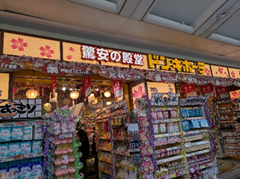
Photographed on 23th Jan. 2026
Don Quijote(Don Quixote), Kawaramachi-dori Shijo-Agaru
Yoshie Doi
What about department stores? Mitsukoshi Isetan Holdings, Japan’s top-selling department store, achieved increased sales and profits, with consolidated sales of approximately 555.5 billion yen (for the fiscal year ending March 2025 (2024)), up 3.6% from the previous year, and operating profit of 76.3 billion yen (up 40.4% from the previous year). Isetan Shinjuku Main Store’s total sales exceeded 400 billion yen for the first time, thanks largely to spending by visitors to Japan. Unlike Don Quijote’s cluttered store layout, this high-end department store offers a clean, streamlined display of luxury goods. This cluttered atmosphere leaves a favorable impression on foreign visitors.
When I saw Don Quijote’s sales strategy, I was reminded of Gozasoro and London Yaki.
Gozasoro, the live kaiten-yaki that can be found in any department store in the Kansai region, currently seems to be the only one in Tokyo that operates it, at Tobu Department Store Ikebukuro. The live-sale version has the deliciousness and gentleness of hand-baked food, and there is always a line. In Tokyo, there is only one store with demonstration-sale, and it seems that Tokyoites buy frozen kaiten-yaki at supermarkets.
My daughter, who returned home for the New Year holidays, regretfully saw the queue for Gozashoro at the Isetan Kyoto store. “Since we can’t eat freshly baked Gozashoro in Tokyo, gourmets sometimes give us frozen kaitenyaki,” she said. She said she always receives delicious homemade meals from a French-Japanese couple who have lived in France for 30 years.
In Kyoto, there is a shop called London Yaki, located just up Shinkyogoku Shijo, that sells castella buns, and I often bought them as a child. At this shop, you can see the machine that makes London Yaki turning, which was a childhood treat. London Yaki is now also sold at the Isetan Kyoto store and the Hankyu Umeda store. Of course, it is still sold at the Shinkyogoku main store.
Nishiki Market, once known as Kyoto’s kitchen, is now being transformed into a market for inbound tourists. Pickled cucumbers are sold on skewers for people to eat on the go, traditional sushi restaurants have been remodeled to cater to inbound tourists, and the number of stores with English signs is on the rise.
Even as times change, there are things we want to protect. Nishiki Market, once known as Kyoto’s kitchen, is now the kitchen for inbound tourists. As we move from an era of making Osechi dishes to an era of buying them, bean shops and kamaboko (fish cake) shops in Nishiki Market have closed. While it is inevitable that things will change with the times, it is also important for stores, consumers, and the market to come up with a survival strategy to adapt to the changes and rebuild.
Shopping at Nishiki Market often reminds me of my identity as a Kyoto resident. Being able to come into contact with traditional ingredients gives me a different feeling than when I shop at a supermarket.
Kyoto City has set a goal of “Declaring Zero Overtourism” by 2030, but I hope that they will not just aim for zero, but will instead implement a concrete policy of coexistence. I would like to propose that they work with the Japan National Tourism Organization (JNTO) to promote PR activities overseas that will help decentralize Kyoto tourism before people visit Japan. Kyo-suzume would also like to make this proposal.
The end of document
Translated by Masami Otani
