Gravity(Attraction) of Kyoto 37
Steaming bento boxes and hot Japanese food saved athletes at the Milan Olympics
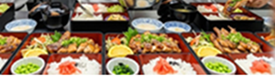
Mirano Olympic lunch box

JRO Organization for Promoting Japanese Restaurants Overseas
See JRO homepage
Yoshie Doi
In the previous issue, we introduced Kitcho’s heated Shokado bento, but towards the end of the Showa era, Awajiya in Kobe released a “heated ekiben” that could be heated by pulling out the string and using steam, which became a hot topic. I have also had heated ekiben on several occasions.
Apparently, these heated bento boxes were a big hit at the Milan Olympics. The first heated ekiben, the “Atchicchi Steam Bento,” went on sale in 1987. In 1975, sukiyaki bento boxes and other items were sold with a portable heating pad underneath, but due to hygiene concerns, they switched to bento boxes that could be heated by pulling a string.。
At the Milan Olympics, the athletes’ meals got cold in the extreme cold of -15 degrees Celsius, and many of them became ill. Japan built three cafeterias and provided them with ozoni and hot meals to help them stay healthy, and many athletes flocked to Japan House.
Why did athletes flock to Japan House rather than the Olympic restaurant at IO℃? While the Ministry of Foreign Affairs has not released official figures, it has been reported that the cost of building and operating the facilities set up by the Japan Sport Council (JSC) to support the Japanese Olympic team at the 2026 Milan-Cortina d’Ampezzo Winter Olympics is approximately 720 million yen. Of this amount, meals were covered, and while the details are unclear, six tons of ingredients and cooking equipment were apparently brought to Milan.
The food situation at the Milan Olympics was dire, with ice hockey matches being postponed due to norovirus infections, so Japanese food was very popular.
I heard that ozōni soup in particular was well-received, as it warms the body and boosts immunity. Apparently, it was so popular that there were queues at Japan House. Even in the -15°C cold, it seems that hand warmers were also a big hit.
In Japan, the word “heating” was coined in 1897, and the idea of heating a room did not exist at the time. People warmed their bodies with kotatsu or hot water bottles. Along the same lines, the idea was to warm the body with soup and keep the stomach in good condition. Recently, it has often been said that the diet of the 1970s was the healthiest for Japanese people. Grilled fish, pickles, miso soup, root vegetables, seaweed, and other Japanese foods are worth revisiting.
The end of document
Translated by Masami Otani
